



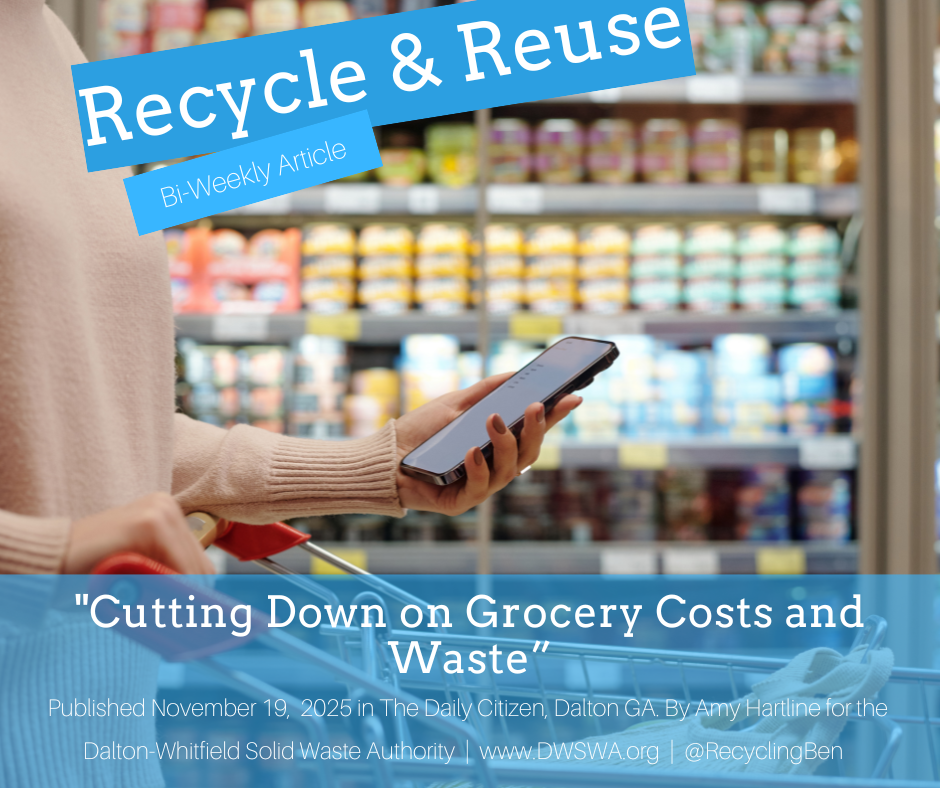



Cutting Down on Grocery Costs and Waste
/Grocery costs are one of the major expenses of a household throughout the year and they rise even more during the holidays. We’ve seen food at home prices increasing since 2020 up almost thirty percent from where they were in January 2020. This makes the challenge of managing our funds at home more of a challenge. Trying to balance these needs while still being sustainable can be draining, but by making a few adjustments and planning ahead we can cut down on our grocery prices and stay ecofriendly in our choices.
The most important part of your grocery shopping always starts with planning. Before choosing what meals you will make that week, shop your pantry and especially fridge first. Make sure that no produce or products are about to expire and need to be used and see if anything you already have can serve as a good base or side to your meals. This will help you not overbuy and will mean you aren’t throwing out food into the landfill that week.
Before taking some time to plan out your meals for the week, make sure to check local sales happening at your grocery store. Most grocery stores have their own apps that will show sales, will update social media profiles with sales, or you can use something like the app, Flipp, to view weekly flyers for multiple stores and compare pricing.
Consider what produce is actually in season. Buying food out of season makes it more expensive and means that your groceries are carrying the environmental burden of being flown in from somewhere. If you want something out of season, see if you can buy it frozen first. These foods last a long time meaning you will be less likely to throw them out and they are frozen at the peak of freshness so they still taste great without as much transportation needs. They also tend to cost significantly less than their fresh counterparts.
Consider the impact of the specific foods you are planning to use also. Common foods such as beef, almonds, and processed foods need more carbon, water, or land usage to produce and have more of an environmental impact because of it. Consider switching out some usage for chicken or peanuts that have less of an environmental load. You can even consider making some meals meatless. Meat tends to be the most expensive item in the cart so having a few meals without it can greatly reduce your cost and how much environmental resources you are using that week.
Now that you have stock of what you need to use and know what is on sale, it is finally time to plan your meals for the week. When you go to shop, check the discount and clearance sections first to see if there is anything on your list you can pick for cheaper or anything you trade out. This has the added bonus of keeping that food from being thrown away soon by the grocery store.
Consider when doing your shopping buying local or in bulk. The Downtown Dalton Farmer’s Market is every Tuesday and Saturday from 8:00 a.m. to 1:00 p.m. at the Dalton Green and The Market at Fiddle Farms is every Saturday from 10:00 a.m. to 2:00 p.m. until March 7th at Fiddleheads Garden Center and you can find fresh produce, baked goods, and crafts at either of these markets. Shopping local and independent can help you get higher quality goods at better prices since there is little overhead involved and it cuts down significantly on the environmental impact of transporting food.
Grocery shopping sustainably doesn’t have to be done perfectly to make an impact. Even instilling just a few of these small changes can help you create habits that are easier on your budget and the environment. As time passes, you’ll find yourself doing these things automatically and should be seeing the benefits in your bank account.
Amy Hartline is the recycling and education program coordinator for the Dalton-Whitfield Solid Waste Authority. Have a recycling question? Contact her at (706) 278-5001 or ahartline@dwswa.org.