




How to Fail at Composting
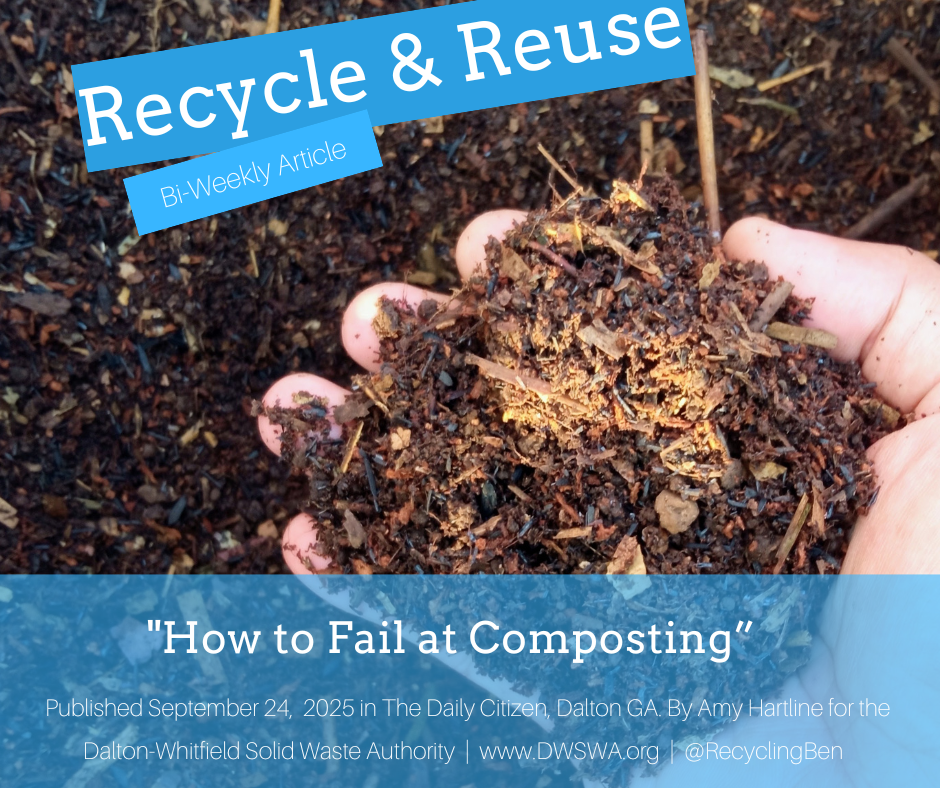
/I often teach about how to succeed at composting, but knowing how to fail at it can be just as helpful. When we know how to fail at composting it is easier to troubleshoot and stay away from the big problems that create issues for us. Composting successfully or poorly is largely about habit and knowing what habits you want to keep or change, will set you up for success.
To start your failed compost bin or pile, you are going to place it wherever you want without any consideration for sunlight or ease of use. When we don’t take sunlight into account, we may miss out on extra heat. That heat helps compost along in the process of decomposition.
Remember, composting is all about habit. If you place your compost somewhere that is annoying to get to or easy to forget, the chances of it failing and not having enough material or getting turned often enough is high.
Now that we’ve got your system poorly set up, you can start using it. If you want your compost to have a hard time, you are just going to throw in your material when you have it and without any concern for having a good balance of brown and green materials. Instead of setting up and prepping a good source of brown materials that are high in carbon like leaves or shredded paper, you’ll just toss those in as you have them. This means that you will likely end up with a lot of material high in nitrogen like food scraps and yard waste. This will be great for bad compost because the heavy nitrogen balance will lead to smells, sliminess, and flies. If you’ve ever wondered how to make compost that everyone in the neighborhood complains about, this is how.
Another great way to make your compost fail is to ignore the importance of chopping or breaking down larger items. Just toss in whole corn cobs, thick sticks, or even entire pumpkins. These will sit there for months, maybe years, without breaking down properly. They’ll also make it frustrating when you go to use the compost later because you’ll still find chunks that never decomposed. Good composting is about giving materials a head start, but bad composting skips all of that effort and guarantees the pile stays slow, clumpy, and inconsistent.
Next, if you want your compost to struggle even more, forget about layering. Toss things in however you like, with no attention to balance. Add in a week of only coffee grounds, then follow it with a week of just grass clippings. Don’t bother mixing in dried leaves, shredded cardboard, or straw. The pile will compress into a dense mat that doesn’t let air flow through, which will slow decomposition to a crawl.
Moisture is another perfect area to get wrong. Instead of checking the compost has the moisture level of a damp sponge, let it get as soggy or dry as you want. The organisms that decompose your waste need just the right amount of moisture to thrive. Anything too far in either direction, and your compost will stall. Bad composting is all about letting those extremes happen.
Finally, if you want to guarantee the lowest chance of success, throw in all the wrong things. Add meat, dairy, oily foods, and even pet waste. These not only attract pests like rats and raccoons, but they also throw off the balance of the pile and introduce pathogens you don’t want in your garden. Successful composting requires being selective about inputs, but bad composting is about tossing in whatever you want, whenever you want, with no second thought.
Now that you know how to fail at composting, you may be interested in how to succeed. Luckily, you can learn that from me at 11:00 am on September 24, 2025 at the Dalton-Whitfield County Library for free at a one-hour class. If you can’t make that just make sure to keep up with the habit of composting and choosing the opposite methods you’ve learned today.
Amy Hartline is the recycling and education program coordinator for the Dalton-Whitfield Solid Waste Authority. Have a recycling question? Contact her at (706) 278-5001 or ahartline@dwswa.org.