




5 Most Common Recycling Mistakes I See Every Week
/I am thankful to live in a time where recycling is a regular part of life in our community and even more thankful for all of our residents that embrace recycling and try to make sure they recycle all they can. Unfortunately, recycling can be confusing for even the most dedicated recyclers. After being in the recycling world for several years, there are five mistakes I consistently see recyclers make.
If you have been recycling for a long time you may still leave off the plastic cap on bottles and jugs before recycling. In years past, bottle caps were removed and thrown away, but recycling technology has improved. Today, residents should place caps back on empty plastic bottles before putting them in the bin. These caps are recycled into new products, including household items such as toothbrush handles. Loose caps are too small to move properly through the sorting equipment on their own, but when attached to the bottle they can be captured and processed correctly.
Cardboard pizza boxes are another item that often causes confusion. In the past, many residents may have heard that pizza boxes could not be recycled, but that is no longer the case. Cardboard pizza boxes are now accepted in our curbside recycling program. Residents do not need to throw the entire box away simply because it held food. While boxes should be emptied of leftover pizza, crusts, and liners, the cardboard itself can now go in the recycling bin, making this one less item headed to the landfill.
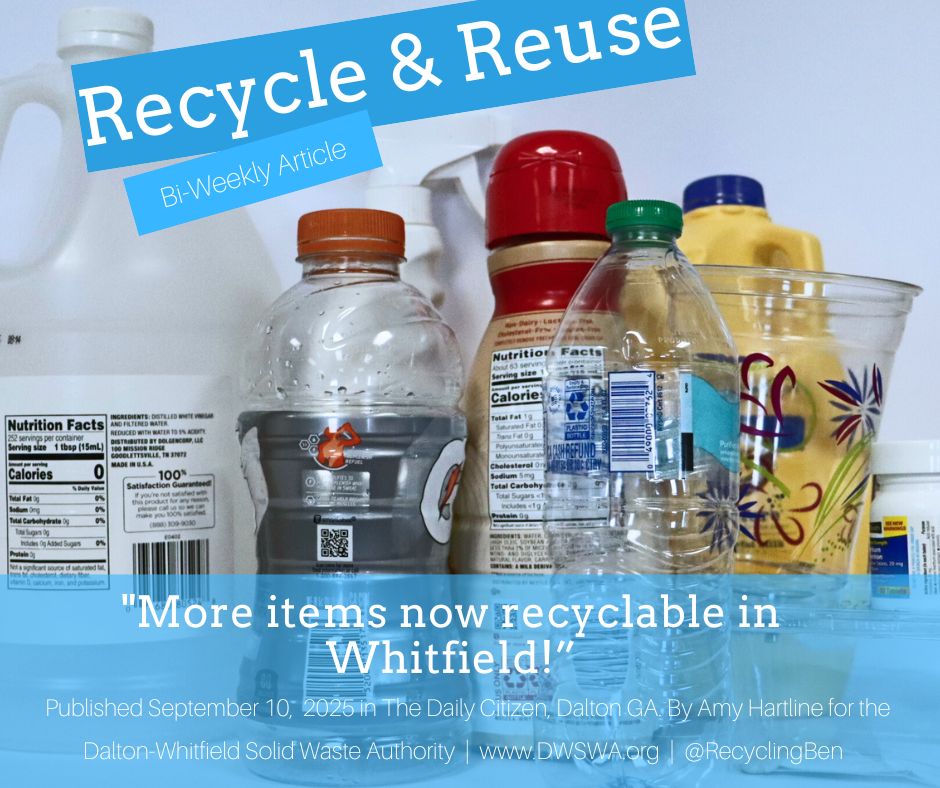
One of the biggest mistakes we continue to see is residents placing plastic containers labeled No. 3 through No. 7 in their curbside recycling bins. While many people assume that any plastic with a recycling symbol can be collected, our local curbside program only accepts plastic labeled No. 1 and No. 2. Plastics in the No. 3 through No. 7 range often include materials that cannot be processed through our current recycling system due to things like composition and melting points. These can end up contaminating loads of acceptable items and slowing the recycling process down as workers must separate these out.
Part of the confusion is that our program has recently expanded to accept all No. 1 and No. 2 that is not flexible plastic instead of just the plastic bottles and jugs which were previously the only acceptable plastic. Common plastics that are labeled one and two include berry containers, many plastic cups, and clamshell containers just make sure to check the numbers because
Plastic bags are a frequent problem in curbside recycling across the country. Grocery bags, bread bags, newspaper sleeves, and other stretchy films may have recycling symbols on them, but they should never go into household recycling carts. These thin plastics wrap around sorting machinery and can shut down equipment for workers to manually remove them. Instead of placing plastic bags in the curbside bin, residents should save them for designated retail drop-off recycling locations like Walmart or Food City.
The final mistake we continue to see regularly is glass placed in curbside recycling bins. Glass bottles and jars are recyclable, but they are not accepted in Dalton-Whitfield curbside collection. Glass can break during pickup, creating safety issues and contaminating other recyclable materials. Residents who want to recycle glass should bring it to one of the Dalton-Whitfield Solid Waste Authority convenience centers, where green, clear, and brown glass bottles and jugs are accepted separately from other materials.
Programs change over time, and some of the habits many of us learned years ago are no longer the best ones to follow. By avoiding plastics No. 3 through No. 7, leaving caps on bottles, keeping plastic bags out of curbside bins, recycling cardboard pizza boxes, and taking glass to convenience centers, we can help make our local recycling program cleaner, safer, and more successful for everyone. It is thanks to committed and knowledgeable recyclers that our recycling program in Whitfield continues to be successful.
Amy Hartline is the recycling and education program coordinator for the Dalton-Whitfield Solid Waste Authority. Have a recycling question? Contact her at (706) 278-5001 or ahartline@dwswa.org.