








Commonly Used Lithium-Ion Batteries Leading to Landfill Fires
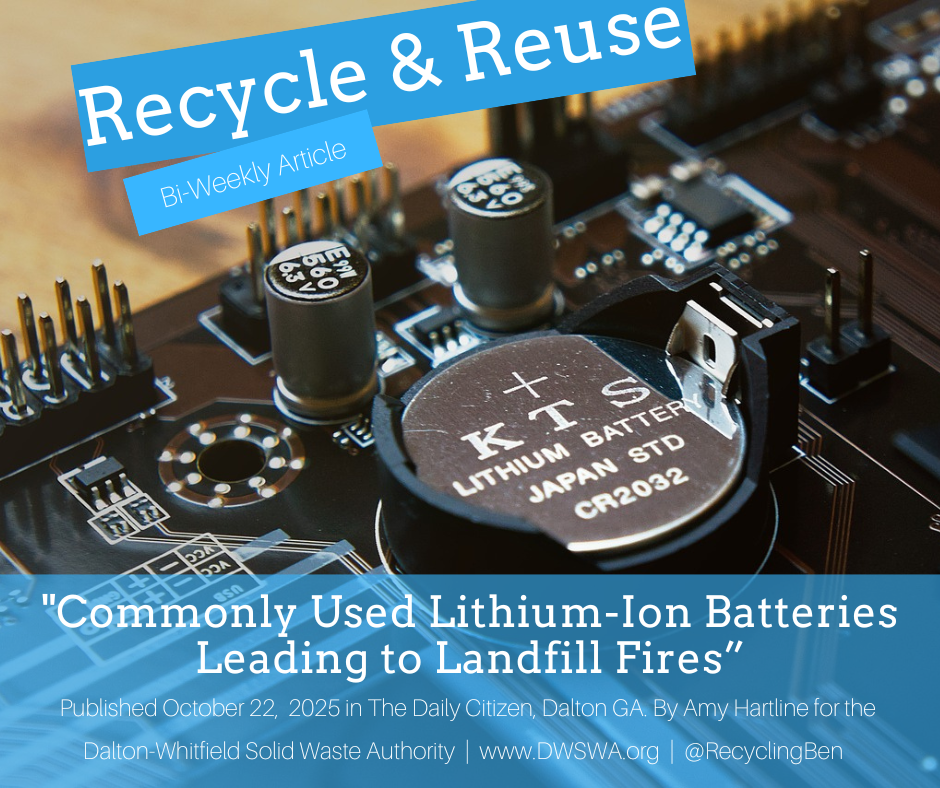
/Certain everyday items in your home can become dangerous if they aren’t handled correctly. Most of the electronics used by Dalton and Whitfield residents such as smartphones, laptops, toys, and more utilize lithium-ion batteries for power. Lithium-ion batteries are used because they provide more energy than other types of batteries and are rechargeable, but they, increasingly, lead to significant fires because they were not handled correctly.
The issue of lithium-ion battery fires has increased enough that the National Fire Protection Association (NFPA) has focused this month during Fire Prevention week on lithium-ion battery safety with the theme “Charge Into Fire Safety: Lithium-Ion Batteries in Your Home.”
The NFPA gives various tips to stay safe including making sure to buy safe products by looking for a UL or other nationally recognized testing label, which means the product meets important safety standards. They also advise that when you charge your device, to place it on a hard, flat surface and never on a bed, couch, or under a pillow and don’t leave your devices plugged in after they are fully charged.
Incorrectly throwing away a lithium-ion battery, also referred to as Li-ion Battery or LIB, can have extremely dangerous and hazardous results. Throwing these batteries in the trash or recycling bin can lead to major fires on garbage trucks, recycling trucks, landfills, and recycling centers. Lithium-ion batteries contain a flammable electrolyte and lithium is highly reactive which poses dangers when handling it as a waste item.
In 2017, 289 waste facility fires broke out in the United States and Canada and caused three deaths and eight direct injuries, according to Fire Rover. Many of these are suspected of being caused by lithium-ion batteries. Since 2017, facility fires have only continued to grow with September 2025 reaching a record high for fires according to Waste360.
So, what items do you need to be careful disposing of so that you don’t end up causing a major fire on your next garbage pick-up day? Laptops, e-Cigarettes and vape pens, smartphones, electronic toys, watches, and rechargeable power tools are just a few items to look out for.
Anything rechargeable most likely has a lithium-ion battery installed and items may have an icon with a trash can with an “x” through it. It is a common mistake to believe that the recycling sign on the battery means it should be put in curbside recycling. That sign means that there is a way for that item to be recycled when it is brough to a drop-off location, not that you can toss it into the bin.
If the batteries are thrown in the regular trash, the batteries will be moved around in a large truck or pushed around in a landfill. Then pressure and heat can cause the battery to spark and ignite a fire. Because the battery is often thrown in a pile full of paper products, cardboard, and other dry materials this fire can easily spread. Fires involving the batteries have extreme heat with temperatures reaching between 392 to 1,832 degrees. This makes the fires extremely dangerous and difficult to extinguish.
To make sure that you are not the cause of these fires, make sure to recycle them at a drop off location. In Whitfield County and the City of Dalton, lithium-ion batteries can be recycled for free by taking them to one of our four convenience centers; Old Dixie Hwy, M.L. King Blvd., McGaughey Chapel, and Westside any time during operating hours. Used lithium-ion batteries can also be taken to drop-off boxes at Lowe’s and Home Depot.
Taking the time to do the extra step of dropping off your lithium-ion battery correctly will help make a big difference in keeping our community safe. The facility fires caused by these batteries are dangerous, but they are also preventable. Remember to check your items before disposal to help prevent damage and keep our waste workers safe.
Amy Hartline is the recycling and education program coordinator for the Dalton-Whitfield Solid Waste Authority. Have a recycling question? Contact her at (706) 278-5001 or ahartline@dwswa.org.