

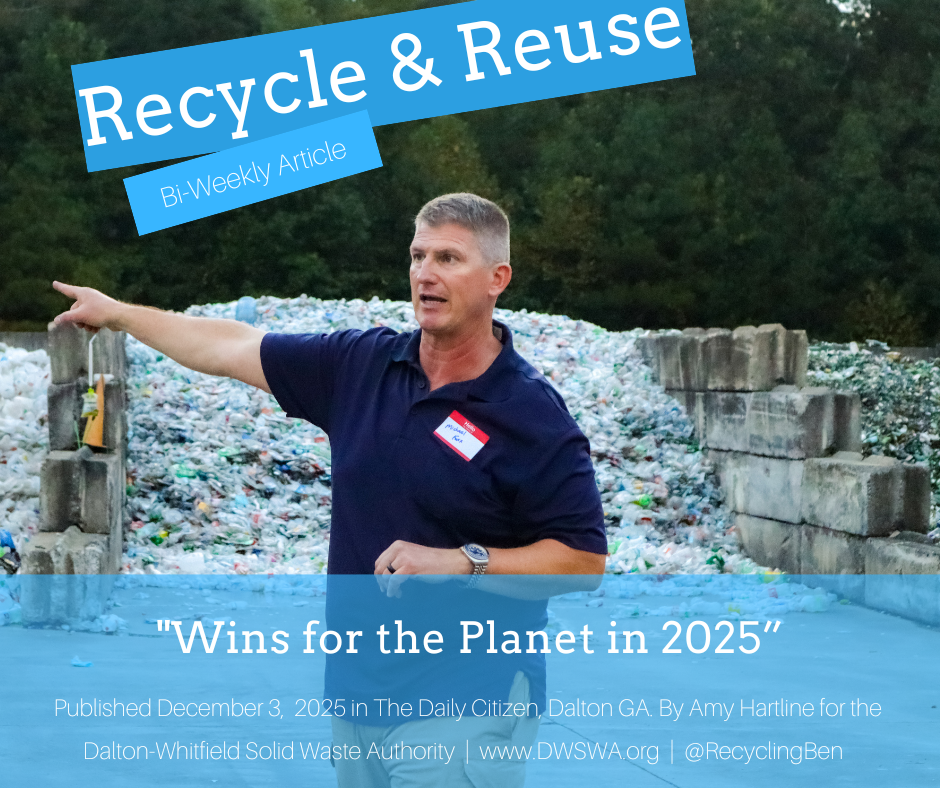



Wins for the Planet in 2025
/The end of the year is the perfect time to reflect on all the good news and improvements that have come from that year. While we have a tendency to focus on negative things when it comes to news, there are plenty of great events occurring around the world especially in the environmental field. This year, let’s appreciate some of the good news that 2025 brought us.
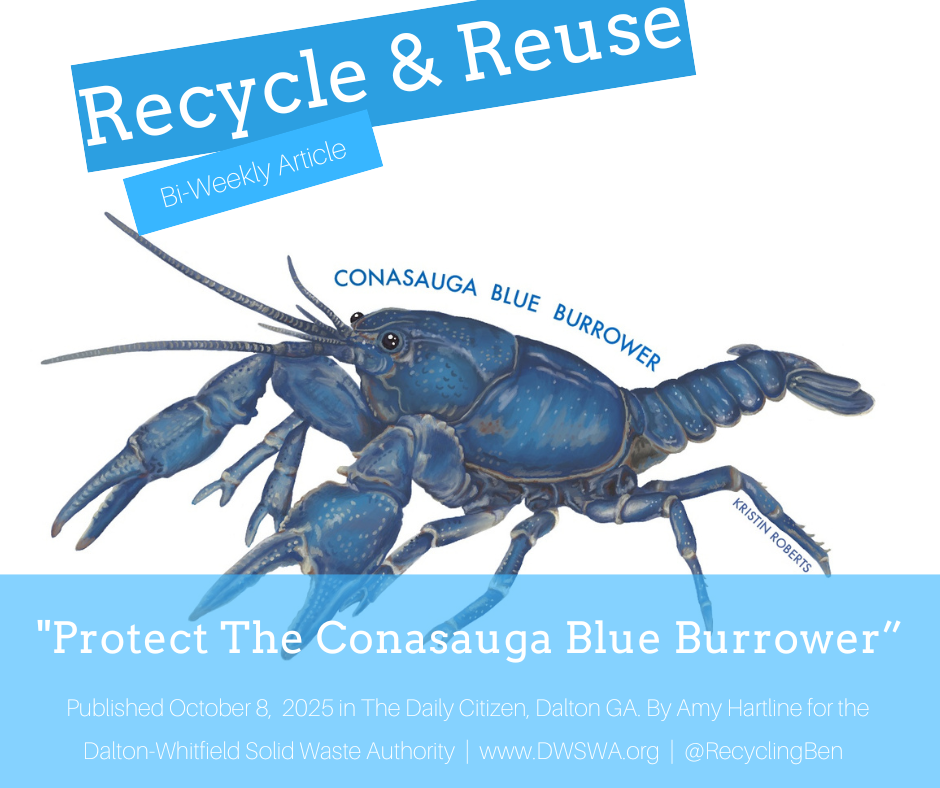
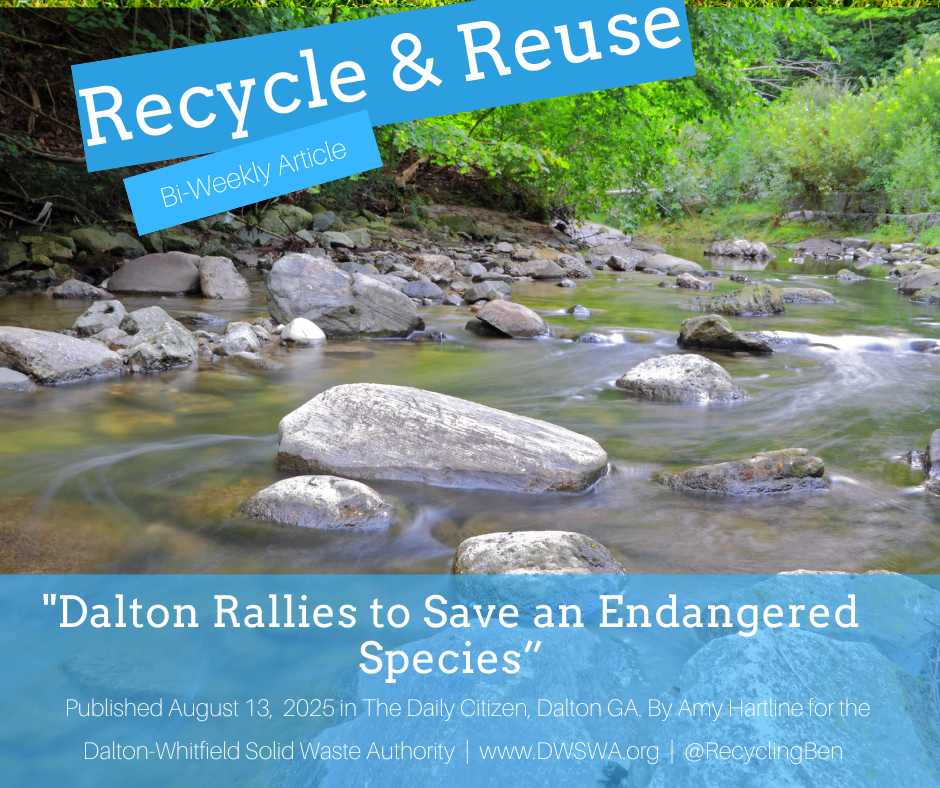
Here at home, 222 volunteers completed the 31st Annual Conasauga River Watershed Cleanup at the end of October where they removed 3,974 pounds of litter from our river’s watershed. The Conasauga River is home to 90 native fish species which is 10 percent of Noth America’s fish fauna. Many of the species residing in the Conasauga River are endangered or threatened and getting to the litter in the watershed will help keep these species alive because they will not get tangled in the litter or attempting to eat it. This year’s cleanup had more volunteers and less litter picked up meaning that the regular sites are seeing a decrease in the amount of litter present. This is a big win for our local waterways.
The famous green turtle, the largest species of sea turtles, has been moved from the rank of “Endangered” to “Least Concern” showing how decades of work to help conserve and protect species can bring them back from the brink of extinction. For the past five decades, groups have been protecting females and their eggs on beaches, releasing hatchlings into the sea, and using education to reduce the amount of these turtles being killed for meat and eggs. While their population is not what it previously was, the dedicated work of many has led to this major cause for celebration.
Determined by think tank, Ember, renewable energy sources such as wind and solar are producing more power globally than coal this year. This shift helps reduce greenhouse gas emissions and improve air quality. Over time, this will also allow adopters to build more resilient power grids. Since 2019 various methods of renewable energy sources and uses now prevents 2.6 billion tons of CO2 each year, equivalent to 7% of global emissions according to the International Energy Agency. Emily Jones of the Georgia Recorder reported that in Georgia, our carbon emissions per person has dropped by 45% from 2005 to 2023 and an analysis done by Georgia Tech found a 49% drop by 2024.
Across the country from us, the world’s largest wildlife crossing has entered its final phase of construction. The Wallis Annenburg Wildlife Crossing connects open space on either side of US Highway 101 for wildlife to cross. More than 300,00 cars will be passing under this wildlife crossing each day. A lot of care and research has been done to make sure the crossing mimics the natural land around it so that it seems natural to wildlife to cross there. Wildlife collisions cost people significantly in property damage and lead to around 200 Americans dying each year as well as 26,000 people injured while also killing off local wildlife. Wildlife crossings such as this one help reduce vehicle collisions, maintain local animal populations, and even improve genetic diversity.
Recycling is seeing increasing participation across the country. This year 77% percent of Americans say they currently recycle according to Waste Management. This is up from the 66% of Americans recycling according to the same survey last year. While the final numbers are not yet in, Dalton curbside recycling has collected 695,500 pounds so far this year and the convenience centers have collected 1,086,180 pounds of recycling this year helping keep items out of the landfill and valuable resources back in business.
Across the board we have seen improvements in various aspects of our environmental health this year. It’s important we don’t forget the many people and groups have been working together over the course of years and decades to create these major wins for our planet and remember the work we do today can have a major impact in the future. While there are always challenges in the environmental field, these wins show us that we are constantly working towards improvement at the same time. How can you help spur good environmental chance in 2026?