
The Back-to-School Routine Most Parents Forget
/As back-to-school season arrives, most families are focused on the obvious transitions. You may start moving bedtime earlier, talk with kids about what behavior is expected of them at school, and start packing their backpack. Another part of the school day that shows up just as often but is rarely talked about ahead of time is recycling.
In 34 schools across Whitfield and Dalton, recycling is part of the daily routine. Students are often asked to sort paper after assignments, clean up after projects, or help keep their classroom organized. When a child already understands what to do, that routine feels simple. When they do not, it can create hesitation or confusion during the first few weeks of school. Taking time to prepare them ahead of time helps them feel more confident walking into those situations.
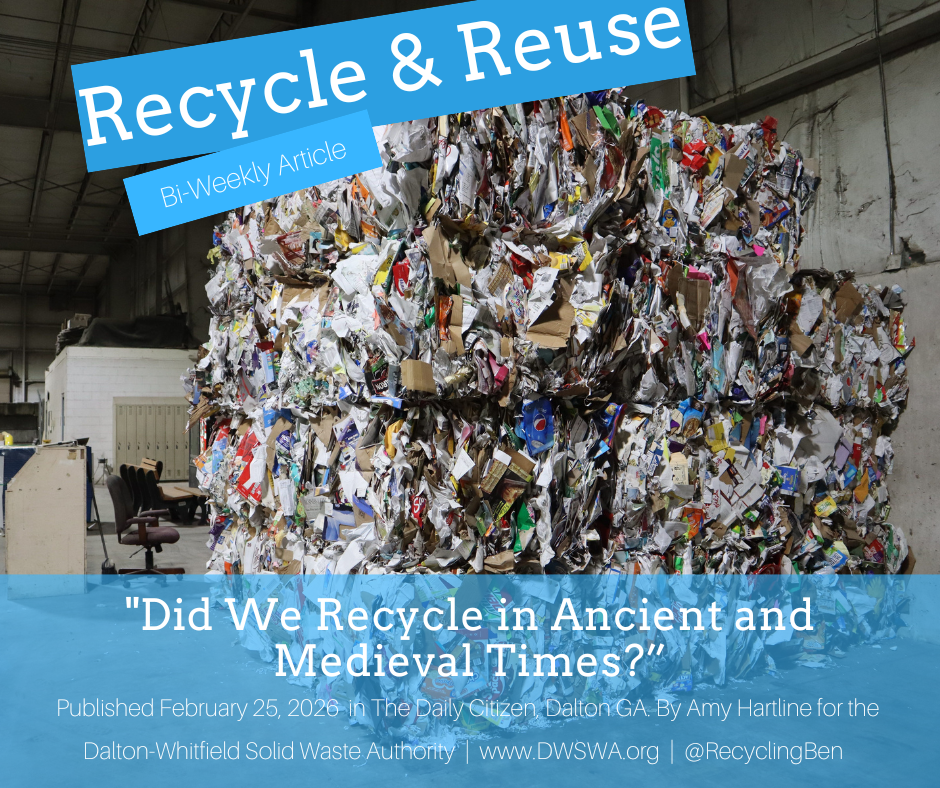
Before children can confidently recycle at school, they need to recognize what they are looking for. Local school programs focus on mixed paper, so begin there. Show them the difference between common paper items such as worksheets, envelopes, cardboard, and packaging. If they are younger, let them touch and compare the materials so they can start to recognize the differences between materials like plastic and paper.
You can make this learning process more engaging by turning it into a simple game. Choose a day each week to look around the house for recyclable paper. Kids can search for items like old homework, junk mail, cereal boxes, or paper towel rolls. As they repeat this activity, they begin to recognize what belongs in the recycling bin without needing to be reminded each time.
As they get more comfortable, you can introduce items that are less obvious. Paperboard such as cereal boxes and snack boxes can be recycled even though they feel thicker than regular paper. Tubes from toilet paper and paper towels are also recyclable. These are items that children often hesitate on, so practicing with them ahead of time helps remove uncertainty.
It is just as important to explain what should not go in the recycling bin. Used tissues, napkins, and paper towels should always go in the trash. Older children can also learn that laminated paper, sticker sheets, and glitter covered crafts are not recyclable. These items are common in classrooms, so understanding this ahead of time helps prevent confusion.
If you want extra support at home, the Dalton-Whitfield Solid Waste Authority (DWSWA) offers free Recycling Ben worksheets on their website dwswa.org. These include activities like matching games, word searches, and coloring pages that help reinforce what children are learning.
Creating a clear system at home can make a big difference. Place a recycling bin in an easy to reach spot and make sure it is clearly separate from the trash. You can let your children help label or decorate the bin so they feel more connected to the process. You can also build recycling into your daily routine by sorting paper after homework or cleaning up together after crafts.
It is also helpful to explain why recycling matters in a way that makes sense to them. Simple explanations about saving trees, reducing waste, and taking care of the environment are enough to give children a reason to care. When they understand the purpose, they are more likely to stay engaged.
Encourage your child to ask their teacher what materials are collected in the classroom and where the recycling bin is. Teachers have a lot to go over in these first few days and it can be easy to forget to point out the recycling bin. This helps the routine feel familiar instead of new.
By the time your child settles into their school routine, recycling will feel like second nature instead of something they have to think through each time. That confidence carries over into other parts of the day as well. When kids feel prepared for the small things, the bigger transitions of a new school year feel much more manageable.